General Instructions : Read the following instructions carefully and follow them :
(i) This question paper contains 37 questions. All questions are compulsory.
(ii) Question paper is divided into six sections Section A, B, C, D, E and F.
(iii) Section A Questions no. 1 to 20 are Multiple Choice type questions. Each question carries 1 mark.
(iv) Section B Questions no. 21 to 24 are Very Short Answer type questions. Each question carries 2 marks. Answer to these questions should not exceed 40 words.
(v) Section C Questions no. 25 to 29 are Short Answer type questions. Each question carries 3 marks. Answer to these questions should not exceed 60 words.
(vi) Section D Questions no. 30 to 33 are Long Answer (LA) type questions. Each question carries 5 marks. Answer to these questions should not exceed 120 words.
(vii) Section E Questions no. 34 to 36 are Case/Source-based questions with three sub-questions. Each question carries 4 marks.
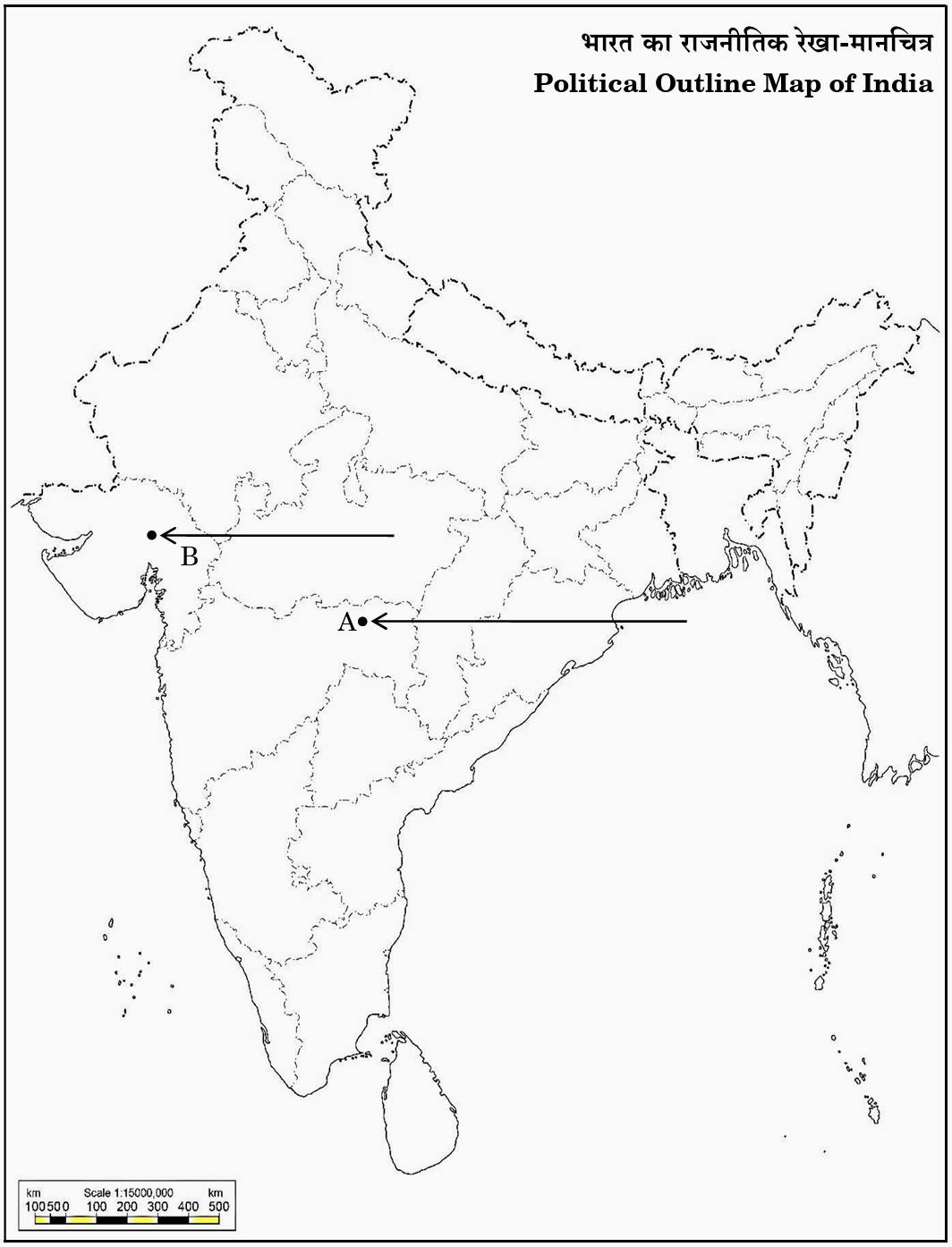
(viii) Section F Question no. 37 is Map skill-based question with two parts 37(a) from History (2 marks) and 37(b) from Geography (3 marks). This question carries total 5 marks.
(ix) In addition to this, NOTE that a separate question has been provided for Visually Impaired candidates in lieu of questions having visual inputs, map etc. Such questions are to be attempted by Visually Impaired candidates only.
SECTION A
(Multiple Choice Questions)
(20x1=20)
Which one of the following regions became a part of unified Italy in 1866?
[1 marks]
Read the following reasons of migration of people from Europe to America till the \(19^{th}\) century and choose the correct option:
I. Poverty and hunger
II. Slaves for sale
III. Wide spread of diseases
IV. Religious conflicts and persecution
[1 marks]
The author of 'Book of Marvels' is:
[1 marks]
Assume you are doing research on \(15^{th}\) century print culture. Which of the following would be the most significant advantage for your research?
[1 marks]
Arrange the following categories of forests in India from the largest to the smallest in terms of area and choose the correct option:
I. Reserved
II. Protected
III. Unclassed
[1 marks]
'Sariska Tiger Reserve' is located in which one of the following states ?
[1 marks]
Match Column I with Column II and choose the correct option:
| Column I (Dam) | Column II (River) |
|---|---|
| a. Hirakud | i. Chambal |
| b. Gandhi Sagar | ii. Krishna |
| c. Nagarjuna Sagar | iii. Kaveri |
| d. Mettur | iv. Mahanadi |
[1 marks]
Choose the correct option regarding major states involved in the Krishna - Godavari issue:
[1 marks]
Imagine you are travelling from Delhi to Chandigarh to attend a wedding, by road in January. Which of the following crops will you notice prominently in the fields during the journey?
[1 marks]
Two statements are given below. They are Assertion (A) and Reason (R). Read both the statements carefully and choose the correct option:
Assertion (A) : Minerals are an indispensable part of our lives.
Reason (R) : All living things need minerals.
[1 marks]
Match Column I with Column II and choose the correct option:
| Column I (Minerals) | Column II (Major Mines) |
|---|---|
| a. Iron ore | i. Gaya |
| b. Mica | ii. Singarauli |
| c. Bauxite | iii. Chandrapur |
| d. Coal | iv. Maikala |
[1 marks]
Belgium solved its problem of majoritarianism by strengthening which of the following types of government?
[1 marks]
Choose the correctly matched pair from the following:
| (Country) | (System) |
|---|---|
| (A) Canada | Unitary |
| (B) Bolivia | Federal |
| (C) Australia | Unitary |
| (D) Spain | Federal |
[1 marks]
Which of the following are the main components of a political party? Choose the correct option:
I. Leaders
II. Active members
III. Followers
IV. Pressure groups
[1 marks]
Study the following table related to 'World Human Development Index' and answer the questions given below :
| S. No. | Country | HDI Rank in the world |
|---|---|---|
| 1. | India | 130 |
| 2. | Myanmar | 148 |
| 3. | Nepal | 149 |
| 4. | Pakistan | 150 |
Amongst the given countries, which one of the following countries has the highest rank in 'Human Development Index'?
[1 marks]
'X' lives in a town. He cultivates flowers along with animal husbandry. The work of 'X' will fall under which sector of the economy?
[1 marks]
Look at the given picture and answer the question that follow :
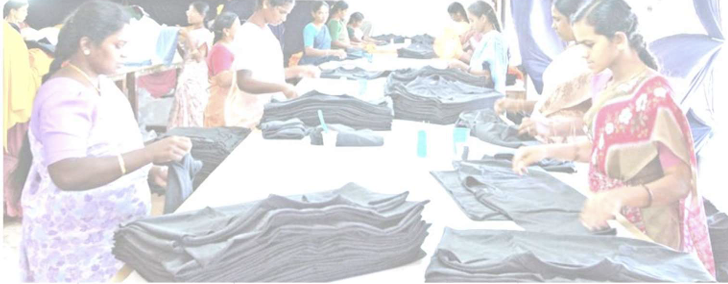
The work being done in the picture falls under which sector of the economy?
[1 marks]
Why does it become difficult for farmers in rural areas to take loans from government banks? Read the following reasons and choose the most appropriate option:
I. Lack of collateral
II. Complicated procedure
III. Higher cost of borrowing
IV. Lack of awareness
[1 marks]
Which of the following groups in urban India depend on informal sources to meet their credit needs?
[1 marks]
Two statements I and II are given below. Read both the statements carefully and choose the correct option:
Statement I: Rapid improvement in technology has been one major factor to stimulate the globalisation process.
Statement II: This has made much faster delivery of goods across long distances possible at lower costs.
[1 marks]
SECTION B
(Very Short Answer Type Questions)
(4x2=8)
| (a) | Explain the role of anti-colonial movement in the rise of 'modern nationalism' in India. |
| OR | |
| (b) | Why did Gandhiji say 'Satyagraha is pure soul-force'? Explain by giving two arguments. |
[2 marks]
Explain any two problems of the 'global ecology' arising due to indiscriminate use of resources.
[2 marks]
Suggest any two measures to remove gender inequality.
[2 marks]
How did the process of liberalisation initiated in India in the 1990s, promote globalisation? Explain.
[2 marks]
SECTION C
(Short Answer Type Questions)
(5x3=15)
"Tribal peasants interpreted the message of Mahatma Gandhi and the idea of 'Swaraj' in yet another way." Explain the statement in the context of Non-Cooperation Movement.
[3 marks]
Read the story of Rinjha and answer the question that follows:
Story of Rinjha
Rinjha lived with her family in a small village at the outskirts of Diphu in Assam. She enjoys watching her family members clearing, slashing and burning a patch of land for cultivation. She often helps them in irrigating the fields with water running through a bamboo canal from the nearby spring. She loves the surroundings and wants to stay here as long as she can, but this little girl has no idea about the declining fertility of the soil and her family's search for a fresh patch of land in the next season.
What type of farming is Rinjha's family doing? Describe any two of its characteristics.
[3 marks]
"That democratic system of government is considered good in which maximum number of citizens are made stakeholders in political power." Explain the statement with suitable arguments.
[3 marks]
| (a) | Explain the importance of political parties in democracy. |
| OR | |
| (b) | Why did India adopt the multiparty system? Explain with suitable arguments. |
[3 marks]
Explain the difference between public and private sector of Indian economy with example.
[3 marks]
SECTION D
(Long Answer Type Questions)
(4x5=20)
| (a) | Analyse the significance of the 'Napoleonic Code' in making the administrative system rational and efficient. |
| OR | |
| (b) | How was liberalism allied to national unity in Europe in the early decades of the \(19^{th}\) century? Analyse. |
[5 marks]
| (a) | "Manufacturing industries are considered the backbone of the economic development of a country." Justify the statement. |
| OR | |
| (b) | "Agriculture and industries complement each other." Justify the statement. |
[5 marks]
(a) Explain any five bases for assessing the outcomes of democracy.
OR
(b) Explain any five values of democracy.
[5 marks]
| (a) | "Recent evidence suggests that overuse of groundwater is becoming a serious threat in many parts of the country." Evaluate the statement in the context of sustainability of development. |
| OR | |
| (b) | "The development goals of different categories of people may differ." Evaluate the statement. |
[5 marks]
SECTION E
(Case/Source-Based Questions)
(3x4=12)
Read the given source and answer the questions that follow :
Read the given source and answer the questions that follow :
Print and Censorship
The power of the printed word is most often seen in the way governments seek to regulate and suppress print. The colonial government kept continuous track of all books and newspapers published in India and passed numerous laws to control the press. During the First World War, under the Defence of India Rules, 22 newspapers had to furnish securities. Of these, 18 shut down rather than comply with government orders. The Sedition Committee Report under Rowlatt in 1919 further strengthened controls that led to imposition of penalties on various newspapers. At the outbreak of the Second World War, the Defence of India Act was passed, allowing censoring of reports of war-related topics. All reports about the Quit India movement came under its purview. In August 1942, about 90 newspapers were suppressed.
(34.1) Explain the meaning of 'censor'.
(34.2) Why did the colonial administration keep an eye on books and newspapers?
(34.3) Why did Gandhiji start a nationwide Satyagraha against the Rowlatt Act? Explain any two reasons.
[4 marks]
Read the given source and answer the questions that follow :
Read the given source and answer the questions that follow : An Experiment in Brazil
A city called Porto Alegre in Brazil has carried out an extraordinary experiment in combining decentralisation with participative democracy. The city has set up a parallel organisation operating alongside the municipal council, enabling local inhabitants to take real decisions for their city. The nearly 13 lakh people in this city get to participate in making the budget for their own city. The city is divided into many sectors or what we call wards. Each sector has a meeting, like that of the gram sabha, in which anyone living in that area can participate. There are some meetings to discuss issues that affect the entire city. Any citizen of the city can participate in those meetings. The budget of the city is discussed in these meetings. The proposals are put to the municipality that takes a final decision about it.
(35.1) Explain the meaning of 'participatory democracy'.
(35.2) In the context of separation of powers, the given example defines which type of government?
(35.3) Describe the structure of the system in India which is almost similar to the above example of Brazil.
[4 marks]
Loans From Cooperatives
Besides banks, the other major source of cheap credit in rural areas are the cooperative societies (or cooperatives). Members of a cooperative pool their resources for cooperation in certain areas. There are several types of cooperatives possible such as farmers cooperatives, weavers cooperatives, industrial workers cooperatives, etc. Krishak Cooperative functions in a village not very far away from Sonpur. It has 2300 farmers as members. It accepts deposits from its members. With these deposits as collateral, the Cooperative has obtained a large loan from the bank. These funds are used to provide loans to members. Once these loans are repaid, another round of lending can take place. Krishak Cooperative provides loans for the purchase of agricultural implements, loans for cultivation and agricultural trade, fishery loans, loans for construction of houses and for a variety of other expenses.
(36.1) Cooperative societies come under which source of credit ?
(36.2) Mention any two sources of capital of cooperative societies.
(36.3) Explain the role of cooperative societies in increasing the income of farmers.
[4 marks]
SECTION F (Map Skill-Based Questions)
(2+3=5)
| (a) |
Two places 'A' and 'B' have been marked on the given political outline map of India (Given Below). Identify them with the help of the following information and write their correct names on the lines drawn near them:
|
||||
| (b) |
On the same political outline map of India, locate and label any three of the following with suitable symbols :
|
[5 marks]